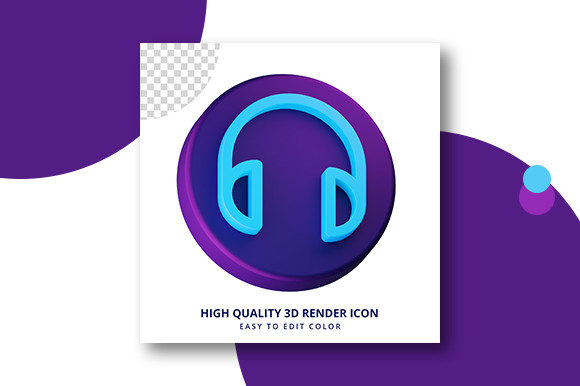
Elevate Your Digital Interface with Premium 3D Headphone Icons
In the rapidly evolving landscape of digital design, visual hierarchy and aesthetic appeal are no longer just "nice-to-haves"; they are fundamental components of user experience. Among the myriad of graphical elements that designers utilize to communicate functionality and mood, icons remain one of the most powerful tools. Specifically, the transition from flat, two-dimensional graphics to three-dimensional (3D) rendered assets has revolutionized how we perceive digital spaces. At the forefront of this trend is the 3D headphone icon, a versatile asset that bridges the gap between technical utility and artistic expression.
Whether you are crafting a sleek landing page for a music streaming service, designing a comprehensive UI kit for a mobile application, or creating marketing materials for a new audio brand, a high-quality 3D headphone icon serves as more than just a symbol. It acts as a tactile anchor in a virtual world, providing depth, realism, and an immediate emotional connection to the concept of sound and listening. This article explores why integrating premium 3D icons into your design workflow is essential, how these assets offer unparalleled flexibility, and where they can be applied to maximize impact.
The Shift Toward Depth: Why 3D Icons Matter in Modern UI/UX
For years, the dominant style in user interface (UI) design was minimalism—specifically, flat design. While effective for clarity and load times, flat design sometimes lacked the tactile quality that helps users intuitively understand digital objects. Enter neumorphism, glassmorphism, and now, full-scale 3D rendering. These styles mimic the physical world, allowing screens to feel more like physical interfaces.
A 3D headphone icon capitalizes on this psychological preference for realism. When a user sees a pair of headphones rendered with realistic lighting, shadows, and material textures (such as matte plastic, brushed metal, or soft leather), their brain instantly recognizes it as a device for audio consumption. This reduces cognitive load, making the interface easier to navigate. Unlike abstract line art, a detailed 3D model conveys status and importance. It suggests that the feature associated with the icon—be it music playback, noise cancellation settings, or audio recording—is a premium, central part of the application.
Bridging the Gap Between Art and Functionality
The significance of using a premium 3D rendering lies in its ability to elevate brand perception. In a crowded market, businesses strive to look innovative and forward-thinking. A standard SVG icon might look functional, but a carefully crafted 3D asset looks expensive and thoughtfully designed. For startups and established brands alike, this subtle upgrade in visual language can influence user trust and engagement. It signals that attention to detail matters, encouraging users to pay closer attention to the content within the app or website.
Unmatched Versatility Across Digital Platforms
One of the greatest advantages of acquiring a standalone 3D headphone asset is its adaptability. Unlike static illustrations that are locked into a specific context, a well-rendered 3D icon is a modular component that can be deployed across various mediums without losing its integrity. Here is how this asset fits into different aspects of modern digital creation:
- Website and Landing Page Design: On a hero section of a landing page, a large, floating 3D headphone can serve as the primary focal point. It draws the eye immediately and sets the tone for the rest of the page. Paired with bold typography and clear calls-to-action, it creates a cohesive narrative about audio quality and immersion.
- UI Kits and Mobile Applications: For developers building UI UX designs, consistency is key. A 3D headphone icon can be integrated into navigation bars, settings menus, or feature cards. Its three-dimensional nature allows it to pop out against flat backgrounds, guiding the user’s finger to critical interactive elements.
- Social Media Posts and Marketing: In the fast-scrolling world of social media, static images often get ignored. However, 3D renders have a unique "stop-the-scroll" quality. Whether used in Instagram stories, LinkedIn banners, or Facebook ads, a vibrant 3D headphone grabs attention. It adds a layer of professionalism that makes promotional content stand out amidst user-generated posts.
- YouTube Thumbnails and Channel Branding: Content creators in the tech, music, and lifestyle niches can use a 3D headphone icon to establish instant brand recognition. Placing it in thumbnails or as a watermark helps viewers identify content related to audio reviews, tutorials, or podcasts instantly.
- Web Banners and Advertising: For marketing, promotion, and advertising campaigns, visual clarity is paramount. A 3D icon ensures that even at small sizes, the subject matter remains recognizable. The depth and shadowing prevent the icon from blending into complex background images, ensuring your message is delivered clearly.
Customization: The Power of Editable Color Scales
A common misconception among beginners is that once a 3D model is rendered, it is fixed in stone. While traditional 3D workflows require complex software knowledge, modern 3D icon assets for UI kits are designed with ease of use in mind. The true value of a premium asset lies in its editability.
These icons typically come with features that allow designers to adjust the color scale effortlessly. Imagine needing the same headphone icon for a dark mode interface versus a light mode interface. With an editable color scale, you can invert or shift the hues to ensure perfect contrast without losing the texture or lighting effects. Furthermore, if your brand colors change from blue to red, you do not need to commission a new illustration. You simply adjust the tint, maintaining brand consistency across all platforms.
This flexibility extends to resizing as well. Because many modern 3D assets are built on scalable vector principles or high-resolution render maps, they can be resized for everything from a tiny favicon in a browser tab to a massive billboard advertisement. This scalability ensures that the icon remains crisp and legible regardless of the display resolution, which is crucial for responsive web design.
Practical Examples in Creative Workflows
To truly understand the utility of a 3D headphone icon, consider a practical scenario. Suppose you are designing a landing page for a new wireless earbud startup. Your goal is to convey comfort, battery life, and superior sound.
You place a large, isolated 3D headphone in the center of the screen. Using the editable color tools, you match the icon’s accent color to your primary call-to-action button. As the user scrolls down, smaller versions of the icon appear next to bullet points highlighting features like "40-Hour Battery" or "Active Noise Cancellation." The repetition of the 3D element creates a rhythmic visual flow, keeping the user engaged. Meanwhile, on your social media channels, you use the same asset but rotate it slightly and add dynamic lighting effects to create a sense of motion, driving clicks to the website.
This cross-platform consistency saves time and reinforces brand identity. Instead of juggling multiple graphic styles, you rely on a single, robust asset that adapts to every need. This efficiency is invaluable for solo designers, small agencies, and marketing teams working under tight deadlines.
Overcoming Common Misunderstandings
Some readers might assume that 3D icons will slow down website loading times. While heavy 3D models can indeed impact performance, modern optimization techniques mitigate this. Many UI-ready 3D icons are provided as optimized PNGs, WebPs, or lightweight GLB files that load almost instantaneously. Additionally, when used as static images in HTML or CSS, they have zero impact on JavaScript execution. Therefore, the choice to use a 3D icon does not mean sacrificing speed for aesthetics; with the right asset format, you can have both.
Another misunderstanding is that 3D design is too difficult for non-technical users. However, because these assets are pre-rendered and ready for UI integration, the user does not need to know Blender, Maya, or Cinema 4D. They only need basic familiarity with design tools like Figma, Sketch, or Adobe XD. The complexity of the 3D modeling is handled by the creator of the asset, leaving the designer free to focus on layout and user experience.
Conclusion: Investing in Visual Quality
In conclusion, the 3D headphone icon represents more than just a decorative element; it is a strategic tool for enhancing user engagement and brand communication. By offering depth, realism, and a tactile feel, it elevates the perceived value of digital products. Its versatility across websites, apps, and marketing materials ensures that your visual message remains consistent and impactful. Moreover, the ability to easily edit colors and resize the asset provides the flexibility needed to adapt to changing design trends and brand requirements.
For anyone looking to improve their UI UX design skills or enhance their digital presence, incorporating premium 3D assets is a smart investment. It allows you to move beyond the limitations of flat design and create experiences that are not only functional but also memorable. Whether you are a seasoned professional or a beginner exploring the world of web design, leveraging a high-quality 3D headphone icon can help you build interfaces that resonate with users on a deeper level. Embrace the dimension of design, and watch your projects come to life.