Realistic 3D Red Balloon
In the landscape of digital design, visual assets are rarely just decorative; they are functional components of a larger communication strategy. When you integrate a Realistic 3D Red Balloon into your workflow, you are not merely placing an image on a canvas. You are introducing a symbol of celebration, attention, and vibrancy that requires precise handling to maintain its integrity across different media. This asset, defined by its high-fidelity rendering and vector-based flexibility, serves as a critical touchpoint for professionals ranging from event marketers to UI/UX designers who need to convey joy or urgency without relying solely on text.
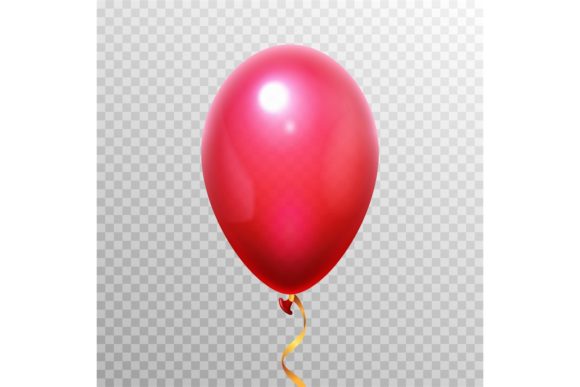
The specific nature of this asset—a flying helium air balloon designed for birthday parties, carnival festivals, or general celebratory contexts—demands a thoughtful approach to implementation. It is not a static icon but a dynamic element that implies motion and volume. Understanding how to manage such an asset within your creative pipeline ensures that the final output remains crisp, professional, and visually compelling, regardless of the scale at which it is displayed.
Asset Architecture and Technical Specifications
Before integrating the Realistic 3D Red Balloon into any project, it is essential to understand the technical foundation upon which it rests. The product file structure is deliberately streamlined to maximize utility while minimizing bloat. The core component is a single vector EPS10 file. This format is the industry standard for scalable graphics, allowing you to resize the balloon from a tiny favicon-sized accent to a massive billboard backdrop without losing edge definition or introducing pixelation artifacts.
Alongside the vector source, a JPEG preview at 72ppi is provided. While this low-resolution image is sufficient for quick reference in file browsers or initial mood boards, it should never be used in final production outputs. Relying on the preview for print or high-DPI web displays will result in blurry, unprofessional visuals that undermine the quality of your work. The separation of these two formats highlights a fundamental principle in digital asset management: always work with the highest fidelity source available to preserve quality control throughout the editing process.
The balloon is isolated on a transparent background, a feature that significantly simplifies the integration phase. In design workflows, compositing images often involves tedious masking processes to remove unwanted backgrounds. By providing a pre-isolated object, the asset allows you to drop it directly into your composition layer stack. This reduces preparation time and minimizes the risk of accidental clipping errors that can occur when manually tracing complex shapes like the curved folds of latex material.
Integration into Creative Workflows
For designers and content creators, the value of the Realistic 3D Red Balloon lies in its adaptability across various stages of a project. Whether you are planning a social media campaign for a local business or designing the interface for a gamified learning app, this asset can serve multiple functions. Its primary use case is obvious: marking special occasions. However, its secondary utility extends to drawing attention to key information, acting as a visual anchor in cluttered layouts, or adding a layer of depth to flat designs.
When working in Adobe Illustrator, the vector nature of the EPS10 file becomes particularly advantageous. You can manipulate individual paths, adjust the gradient meshes that define the shiny latex texture, or modify the knot and string details. This level of granular control allows for customization that generic stock photos cannot offer. For instance, if your brand guidelines specify a slightly different shade of red, you can alter the color profiles of the balloon’s surface instantly. This capability supports consistency, ensuring that even a celebratory element aligns perfectly with your established visual identity.
Furthermore, the asset’s isolation on a transparent background facilitates seamless interaction with other design elements. You can layer shadows beneath the balloon to ground it in a specific lighting environment, or overlay it with textures to match the aesthetic of a vintage carnival theme. These adjustments require a vector editor, reinforcing the need for proficiency in tools like Illustrator or Affinity Designer. Knowing how to navigate the layers and edit the underlying geometry is crucial for achieving a cohesive look rather than a disjointed collage effect.
Strategic Application in Marketing and Events
From a marketing perspective, the Realistic 3D Red Balloon acts as a powerful psychological trigger. Red is a color associated with energy, passion, and urgency, while balloons universally signal celebration and reward. Combining these elements creates a visual cue that captures attention immediately. For entrepreneurs and small business owners, this means the asset can be strategically placed to highlight promotions, announce openings, or celebrate milestones.
In the context of event design, whether physical or virtual, the balloon provides a focal point. For digital invitations or email newsletters, a well-placed balloon graphic can break up text blocks and guide the reader’s eye toward calls to action. Because the vector file scales infinitely, the same asset can be used consistently across all platforms—from mobile screens to large-format prints—without requiring separate versions for each medium. This efficiency reduces the workload for marketers who must produce multi-channel campaigns under tight deadlines.
Educators and bloggers may also find utility in this asset. In educational materials, colorful and realistic graphics help maintain engagement among younger audiences. A balloon graphic can illustrate concepts related to physics (helium density), mathematics (geometry of spheres), or language arts (descriptive writing prompts). The realism of the 3D render adds a layer of authenticity that cartoonish clip art lacks, making it suitable for more mature or professional-looking educational content as well.
Best Practices for Quality Control and Organization
To ensure the long-term usability of the Realistic 3D Red Balloon, proper organization and quality control measures should be implemented from the start. Save the original EPS10 file in a secure, backed-up location before making any edits. Create working copies for experimentation, preserving the pristine original for future projects. This practice protects against data loss and allows you to revert changes if a particular design direction fails to meet expectations.
When exporting final designs, always verify the resolution and color mode appropriate for the intended output. For web use, export as PNG-24 to retain transparency and sharp edges, ensuring the balloon blends naturally with varied background colors. For print, convert the document to CMYK color mode and check that the vector paths remain intact. High-quality latex renders rely heavily on subtle gradients and reflections; if these are rasterized prematurely or compressed incorrectly, the illusion of three-dimensionality can collapse, resulting in a flat, muddy appearance.
Additionally, consider the contextual fit of the balloon within your overall composition. A realistic 3D object can sometimes clash with flat, minimalist designs if not handled with care. To mitigate this, adjust the opacity, apply soft drop shadows, or match the lighting direction of the balloon to the rest of the scene. These subtle tweaks create visual harmony, making the balloon appear as an integral part of the environment rather than a pasted-on element.
Long-Term Value and Scalability
The investment in a high-quality vector asset like the Realistic 3D Red Balloon pays dividends over time. Unlike temporary templates or low-res images that become obsolete with changing trends, vector graphics remain relevant as long as the basic concept holds true. Celebration and festivity are timeless themes, ensuring that this asset can be repurposed year after year. As your business or personal brand evolves, the balloon can be adapted to fit new styles—perhaps by desaturating it for a more subdued tone or animating it for video content.
Moreover, owning the vector source code grants you autonomy. You are not dependent on external updates or subscription services to access the asset. You have full control over its modification, distribution, and application. This independence aligns with the goals of productivity-minded users who seek efficient, self-sufficient workflows. By mastering the use of this asset, you enhance your ability to produce high-impact visual content quickly and reliably, turning a simple graphical element into a versatile tool for effective communication.
In conclusion, the Realistic 3D Red Balloon is more than just a festive decoration; it is a robust design component that supports a wide array of professional needs. By understanding its technical specifications, leveraging its vector capabilities, and applying it with strategic intent, you can elevate your projects from ordinary to exceptional. Whether you are organizing a carnival festival, launching a product, or simply adding a touch of cheer to your daily communications, this asset offers the flexibility and quality required to succeed in a competitive digital environment.