Washington, 3D Layered Tropical: A Streamlined Workflow for CNC and Laser Enthusiasts
In the realm of digital fabrication and woodworking, efficiency often dictates the success of a project. Whether you are a small business owner scaling production, an educator teaching design principles, or a hobbyist looking to create unique home decor, the gap between concept and physical reality can be bridged effectively with the right tools and assets. One such asset that has gained traction in recent workflows is Washington, 3D Layered Tropical. This specific project offers a compelling blend of aesthetic appeal and technical simplicity, designed specifically for CNC routers and laser cutters.
The core value proposition of this project lies not just in its visual outcome—a lush, multi-dimensional tropical scene—but in how it integrates into your existing production pipeline. By providing vector drawings in electronic format, along with a comprehensive cutting plan, the creator removes the most time-consuming phase of custom woodwork: the initial design and engineering. For professionals and creators alike, this means shifting focus from repetitive drafting to execution, customization, and finishing.
Understanding the Asset: What Is Washington, 3D Layered Tropical?
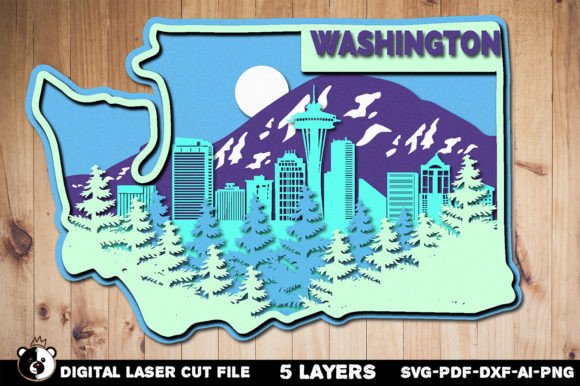
Washington, 3D Layered Tropical is a pre-designed architectural model intended for layered construction. Unlike flat decals or single-layer signage, this project utilizes depth to create a sense of immersion. The design typically features overlapping elements—such as palm fronds, flowers, and geometric backgrounds—that stack together to form a three-dimensional relief. The result is a piece that catches light differently depending on the viewing angle, adding a premium feel to any space.
What makes this particular file set particularly valuable for mass production or rapid prototyping is its structure. The files are provided in standard vector formats compatible with industry-leading software like Adobe Illustrator, CorelDRAW, and CAD programs used by CNC operators. This compatibility ensures that whether you are running a high-speed CO2 laser or a precision router, the toolpaths can be generated without complex conversion errors. The inclusion of a "drawing-vector cutting plan" further streamlines the process, offering clear instructions on which layers correspond to which cuts, reducing setup time and minimizing material waste.
Integration into Professional Workflows
For entrepreneurs and freelancers, time is currency. The traditional workflow for creating custom wooden art involves sketching, digitizing, testing scale, adjusting tolerances, and finally cutting. With Washington, 3D Layered Tropical, the digitization and tolerance adjustment phases are largely handled. This allows makers to integrate the project into their business models immediately.
Consider a scenario where a boutique gift shop owner wants to offer personalized wall art. Instead of hiring a designer for each new collection, they can purchase this asset, modify the text or minor graphical elements to suit a client’s request, and proceed directly to production. This modularity supports a "mass customization" approach, where products are unique to the buyer but manufactured using standardized, efficient processes. Similarly, educators can use this project to teach students about layering techniques, depth perception in design, and the practical differences between laser cutting and CNC routing, all within a single, cohesive lesson plan.
Material Selection and Preparation
While the digital file provides the blueprint, the physical outcome is heavily dependent on material choice. The recommendation for this specific project is 3mm plywood. This thickness strikes an optimal balance between structural integrity and ease of cutting. Thinner materials may lack the rigidity needed for the layered effect to stand out, while thicker boards require more powerful machines and slower cutting speeds, increasing energy costs and wear on equipment.
Plywood is preferred over solid wood for this application due to its consistency. Solid wood grains can vary significantly, leading to inconsistent burn lines in laser cutting or tear-out in CNC routing. Plywood, particularly high-grade birch or poplar ply, offers a uniform surface that accepts paint and stain evenly. Before loading your material, ensure it is flat and free of voids. If you are using a laser cutter, verify that your machine’s bed size accommodates the largest layer of the design. For CNC users, secure the sheet firmly to prevent vibration during intricate cuts.
Customization and Post-Processing
One of the strongest aspects of downloading and modifying these vector files is the ability to tailor the design to specific brand identities or interior themes. Once you have the electronic format, you can open the file in your preferred editing software. You might adjust the spacing between layers to alter the depth of field, change the scale to fit a different wall space, or even swap out certain botanical elements for seasonal variations. This flexibility transforms a static product into a dynamic asset that can be reused across multiple campaigns or product lines.
After the cutting phase is complete, the assembly process begins. Because the layers are precise, they should slot together or adhere smoothly with minimal gaps. However, the true character of the piece emerges during decoration. The raw cut edges of plywood provide an excellent canvas for painting. You can opt for a monochromatic scheme for a modern look, or use vibrant acrylics to highlight the tropical theme. Some creators choose to leave the natural wood grain visible, applying a clear matte sealant to protect the surface while maintaining an organic aesthetic. Decorative elements, such as metallic leafing or subtle distressing, can also be applied to enhance texture and visual interest.
Economic Efficiency and Scalability
From a business perspective, Washington, 3D Layered Tropical is engineered for economy. The design minimizes waste by nesting parts efficiently within the constraints of standard sheet sizes. Furthermore, the simplicity of the assembly reduces labor hours. There are no complex joinery requirements like dovetails or mortise-and-tenon joints; instead, the layers rely on friction fits or simple adhesive bonds. This reduction in assembly complexity is crucial for scaling operations. If you are fulfilling bulk orders, the predictability of the cut and the speed of assembly allow for higher throughput without sacrificing quality.
Additionally, the archival nature of the files means that once purchased, the asset is yours indefinitely. You are not locked into a subscription model or subject to version changes that might break compatibility. This long-term usability contributes to a lower total cost of ownership compared to commissioning original designs repeatedly. It also allows for inventory planning; you can cut blank layers in advance and store them, ready to be assembled and finished upon receiving an order. This just-in-time manufacturing strategy helps manage cash flow and storage space effectively.
Troubleshooting and Quality Control
Even with pre-made plans, quality control remains essential. When integrating this project into your workflow, always perform a test run on scrap material first. Check for kerf compensation—the amount of material removed by the blade or laser beam. While vector files usually account for standard kerf, variations in machine calibration or material density can affect fit. If the layers do not slide together smoothly, you may need to adjust the vector paths slightly in your software to widen or narrow the connection points.
Another common issue is charring on laser-cut edges. To mitigate this, optimize your laser settings (speed, power, and air assist) for the specific grade of plywood you are using. For CNC routes, ensure your bits are sharp; dull bits can cause burning and rough edges that complicate painting. Consistency in your setup procedures will yield repeatable results, which is vital for maintaining customer satisfaction in commercial applications.
Conclusion
The Washington, 3D Layered Tropical project represents a smart intersection of design intelligence and manufacturing pragmatism. It empowers users to bypass the bottlenecks of initial design and focuses resources on what matters most: finishing, branding, and delivery. By leveraging vector-based precision and user-friendly assembly methods, both seasoned professionals and newcomers can produce high-quality, visually striking wood art with minimal friction. Whether used for personal enrichment, educational demonstrations, or scalable commercial ventures, this asset provides a robust foundation for creative and efficient production.